TDD Reconstruction Restoration Ramsey
📞 201-510-5444
Property Damage Restoration Woodbridge Township, NJ
Ramsey • NJ

Mold Remediation in Ramsey.

Mold prevention done DURING drying instead of remediation done AFTER — applied to every water loss we mitigate.

📞 201-510-5444 Local team in Ramsey 24/7 dispatch
Local Based in Ramsey, NJ
IICRC S500 + S520 + S700 protocols
Insurance Direct billing to all major carriers
Service Overview

How We Approach It

Mold remediation is what happens when a water event was not properly dried, or when a chronic moisture problem was ignored long enough for fungal growth to establish. We follow the IICRC S520 standard for safe, effective mold removal in Ramsey properties.

What's Included

  • IICRC S520 protocol
  • Negative-air containment
  • HEPA filtration
  • Source removal to documented line
  • Antimicrobial application
  • Optional 3rd-party clearance testing

Source Moisture: the Step Most Cleanups Skip

Mold needs three things to grow: moisture, organic material, and time. Organic material is everywhere in a building (drywall, wood, dust). Time is unavoidable. The only variable a remediator controls is moisture. If the source moisture is not eliminated, the mold returns regardless of how thoroughly the cleanup was performed.

Common moisture sources in Ramsey properties: roof leaks (intermittent — only during rain events, easy to miss), plumbing leaks (slow drips behind walls, often discovered only when staining or odor appears), foundation seepage (basement water during heavy rain), HVAC condensate failures (drain pan overflow, frozen evaporator coil melt), inadequate bathroom ventilation (chronic high humidity in poorly-vented bathrooms), and ground-water infiltration in below-grade spaces.

Our scope-of-work for any mold remediation includes a source-moisture investigation as phase one. If the source is a plumbing leak, we coordinate with a plumber to repair before remediation. If it is a roof leak, the roof gets repaired first. If it is HVAC, the HVAC tech gets involved. Skipping this step guarantees the mold returns. We do not skip it.

Containment + HEPA Filtration — Why the Plastic Sheeting Matters

If you walk into a mold remediation job and the contractor is not running HEPA-filtered negative-air containment, walk back out and call someone else. Disturbing mold growth releases millions of spores into the air. Without containment, those spores spread throughout the rest of the property — turning a contained 200 sqft mold problem into a whole-house contamination event.

Proper containment: 6-mil plastic sheeting + zip-wall framing creates a sealed barrier between the affected area and the rest of the structure. HEPA-filtered air scrubbers run inside the containment to capture airborne spores during the work. Negative-air pressure differential (containment is at lower pressure than the rest of the structure) means any air leakage flows INTO the containment rather than out. PPE for the techs: Tyvek suits, respirators with P100 cartridges, gloves, foot covers.

This setup adds equipment cost and labor time to a remediation job, which is why fly-by-night operators skip it. The cost difference shows up later — when the contamination has spread to areas it was not in before, and the second remediation is 3-5x the first.

Process

Our Process

  1. 01

    24/7 Dispatch

    Live answering service routed directly to dispatch. Most Ramsey addresses see a truck within 60 minutes of the call.

  2. 02

    IICRC S500 Protocol

    Loss category established (Cat-1, Cat-2, Cat-3) on first inspection. Protocol matched to category — no shortcuts on contaminated water cleanup.

  3. 03

    Industrial Drying

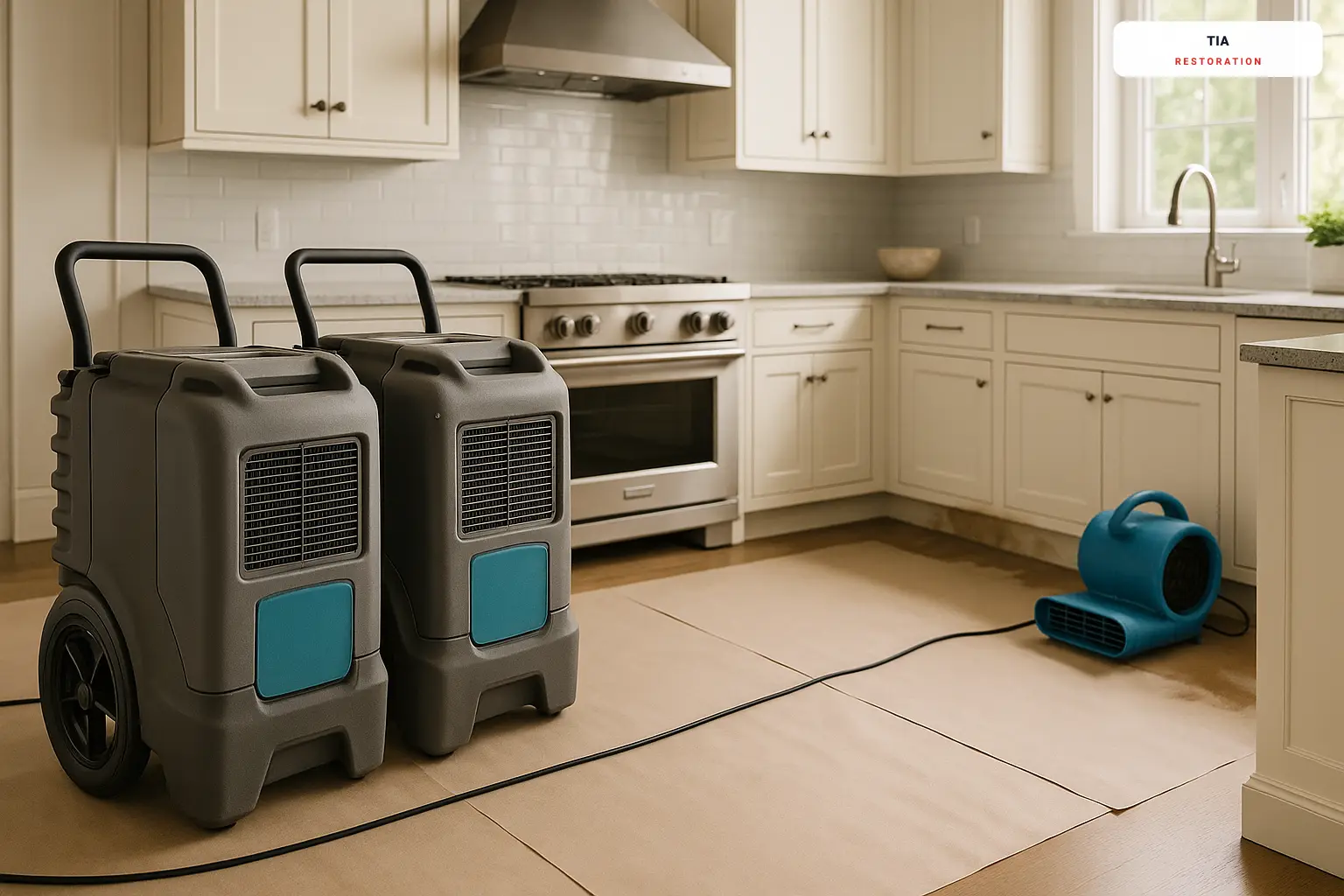
    Truck-mounted extraction, high-velocity air movers, LGR dehumidification, HEPA-filtered negative air when needed. Equipment sized to the loss, not under-spec to save cost.

  4. 04

    Verified Moisture Clearance

    Final clearance readings on every substrate before reconstruction starts. We do not close the mitigation phase on "looks dry" — we close it on documented moisture content at baseline.

  5. 05

    Single-source Reconstruction

    Rebuild scope mapped directly from mitigation documentation. No contractor handoff, no scope renegotiation, no surprise costs three weeks in.

The difference

Why Customers Choose Us

Real reasons. No invented stats, no manufactured awards.

  • 01

    Owner-Led Operations

    Direct access to the owner during your project, not a project-coordinator buffer. Decisions get made fast. Issues get resolved without waiting for a callback from someone who has to "check with the boss."

  • 02

    Documented Drying, Not Guessed

    Calibrated moisture meters on every wet substrate, daily readings logged, equipment repositioned based on what is actually drying. We close the mitigation phase only when readings return to dry-standard for each material.

  • 03

    Built For Ramsey Properties

    Older NJ housing has galvanized supply lines, plaster walls, original hardwood, and the kind of architectural detail that has to be preserved through any restoration job. We know what we are walking into.

Service Area

Serving Bergen County

Restoration coverage from Ramsey, NJ across the full Bergen County footprint. Active emergencies dispatch within the hour. Non-emergency consultations and reconstruction work scheduled at the property owner's convenience. We work both single-family residential and small commercial in the corridor.

Counties Covered

  • Bergen County, NJ

Cities We Service

Each Bergen city below opens a local page with arrival times from our Ramsey base and the loss patterns we handle most often in that municipality.

Not sure if you're in our area? Call 201-510-5444 and we'll tell you in 30 seconds.
FAQ

Frequently Asked Questions

If you don't see your question, just call or message us.

Do I have to leave my home during restoration? +

For most water-damage jobs, no. We work in the affected area while you live in the rest of the home. Cat-3 sewage cleanup requires evacuation of the affected area during the cleanup phase because the work itself aerosolizes pathogens. Major fires often require temporary relocation while smoke + soot are addressed. We discuss displacement on the first call so you can plan.

What is IICRC S500 and why does it matter? +

IICRC S500 is the industry standard for water damage restoration — published by the Institute of Inspection, Cleaning and Restoration Certification. It defines water categories (Cat-1 clean, Cat-2 grey, Cat-3 contaminated), drying standards (moisture readings to baseline), and protocols for each. Restorers who follow S500 produce work that holds up. Restorers who skip it produce work that fails inspection or grows mold within months.

Can you save my hardwood floors after water damage? +

Often yes, if we get there fast and the wood has not been wet for an extended period. Our protocol: extract surface water, run targeted air movement under the floor (we use specialized hardwood drying mats), monitor moisture content with pinless meters that do not leave marks. If readings come back to dry standard, the floor is salvageable. If not, replacement is the right call — we tell you honestly which one applies.

What should I do in the first hour of a water emergency? +

Shut off the water at the main if you can locate the source. Kill power to the affected area at the breaker if water is reaching outlets. Move what you can save away from the cascade path. Photograph the loss in its current state for insurance. Then call us — we are mobilizing while you are still on the phone.

Does insurance cover sewer backup? +

Standard homeowners insurance does NOT cover sewer backup. The fix is a sewer/water backup endorsement on your policy, typically $50-150/year. Coverage is usually $5,000-$25,000 depending on the limit you select. If you have not added the endorsement, the cleanup is out-of-pocket. Add it now to protect against future events.

How do you remove smoke odor after a fire? +

Smoke odor lives in porous materials at the molecular level — air freshener does not work. We use hydroxyl generators (safe for occupied spaces, breaks down VOCs over 3-7 days), ozone treatment (faster, requires evacuation), thermal fogging, and source removal for materials that cannot be deodorized. Air quality testing verifies odor levels return to baseline before reconstruction.

What is a backwater valve and do I need one? +

A backwater valve is a one-way valve installed in your main lateral drain that closes if sewer pressure tries to push water back into your basement. Cost is $1,500-$3,500 installed. For Ramsey properties on combined sewer or older municipal systems, it is the single most effective sewer-backup prevention measure. We can refer to qualified plumbers if you want one installed.

Call Now • Ramsey

Need Restoration in Ramsey? One Call Gets a Crew Moving.

One phone call gets a truck rolling. Real Ramsey team, real local response time, no automated phone tree. We'll be on site fast.

📞 Tap To Call 201-510-5444

24/7 Emergency Dispatch

📞 Call 201-510-5444